• reviews
  • bites
  • reel deal
  • thoughts
  • about
  • contact
Menu

stixpicks

movies made simple
  • reviews
  • bites
  • reel deal
  • thoughts
  • about
  • contact
×

Blink twice if you’re in there.

Ghost in the Machine

Michael Borek February 15, 2026

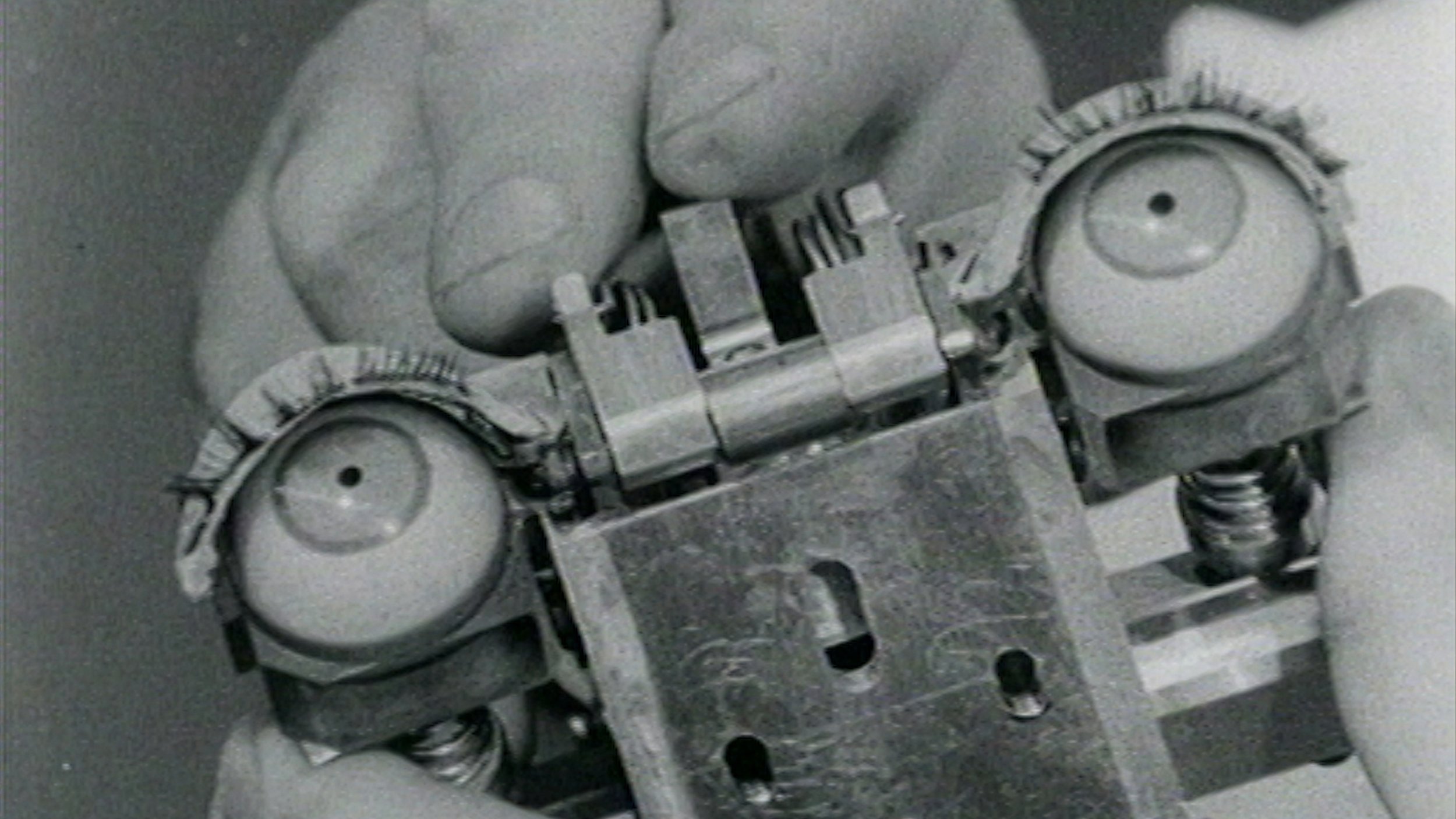
Ghost in the Machine may be the most informationally dense documentary we ever see. For 110 furious minutes—without a single slowdown—it pelts us with idea after idea, trying to get us up to speed about the history and future of AI and machine learning. It is sweeping, unsettlingly informative, and completely overstimulating.

So, let’s keep it simple. What actually happens is that the director weaves together video-recorded statements from observant folks like data scientists, philosophers, astrophysicists, linguists, authors, and AI researchers. (We know when they’re talking because “Not AI” is stamped on the screen, and we know when we’re watching soup when “AI” is the stamp.)

The ideas that these people share with us are, well, shocking, and deeply unsettling if true. They include:

(i) AI, AGI, and ASI are marketing gimmicks. Machine learning is just statistics that keeps track of precisely the correlations that humans tell it to. Correlations—not causations—and at our direction, not on the machine’s own. A completely stoppable runaway train. This has meaningful implications for the sorts of values that its creators are consciously (or subconsciously) directing it with, and we should ask the creators to explain these values.

(ii) This statistics stuff was actually created by a racist person, for the purposes of eugenics (aka killing certain people that other people deem are unworthy of living). So when a tech evangelist talks about efficiency and betterment, what they are actually doing is maintaining an unspoken hierarchy of values, perpetuating the idea that there are certain human traits that of course should be minimized and eliminated. Because after all, we’re just robots, and our calling is to be the most efficient, most happy, most smart, most white, most male, all the time, right?

(iii) The amount of resources that it takes to maintain this statistical software is literally earth-shattering. The stuff devours water where the residents already don’t have enough to drink. It eats the hope of struggling people in places like Kenya in exchange for owning—and monetizing for its own purposes—every little bit of data about them.

(iv) There will never be a singularity. No god-like intelligence. Rather, this is all an arms race. Whoever throws the most money and data at it the fastest will have the most powerful statistical tool, a tool that will be very good at making terribly important decisions much faster than the time it would take for a careful person to carefully consider the ramifications of the decision. Military stuff.

Really, it boils down to two questions. (1) Are you ready for this? And more importantly, (2) if you’re not, are you ready to change its trajectory (which you totally can) to a more healthy one? Ready to use your own brain whenever you can, instead of one that a self-interested, untherapized stranger tells you is better for you?


In 2026, Sundance 2026, Documentary

Guess who.

Queen of Chess

Michael Borek February 15, 2026

The great thing about the documentary Queen of Chess is that it doesn’t even try to make chess fun. Instead, it’s a light and uplifting reminder that mindset can change our lives.

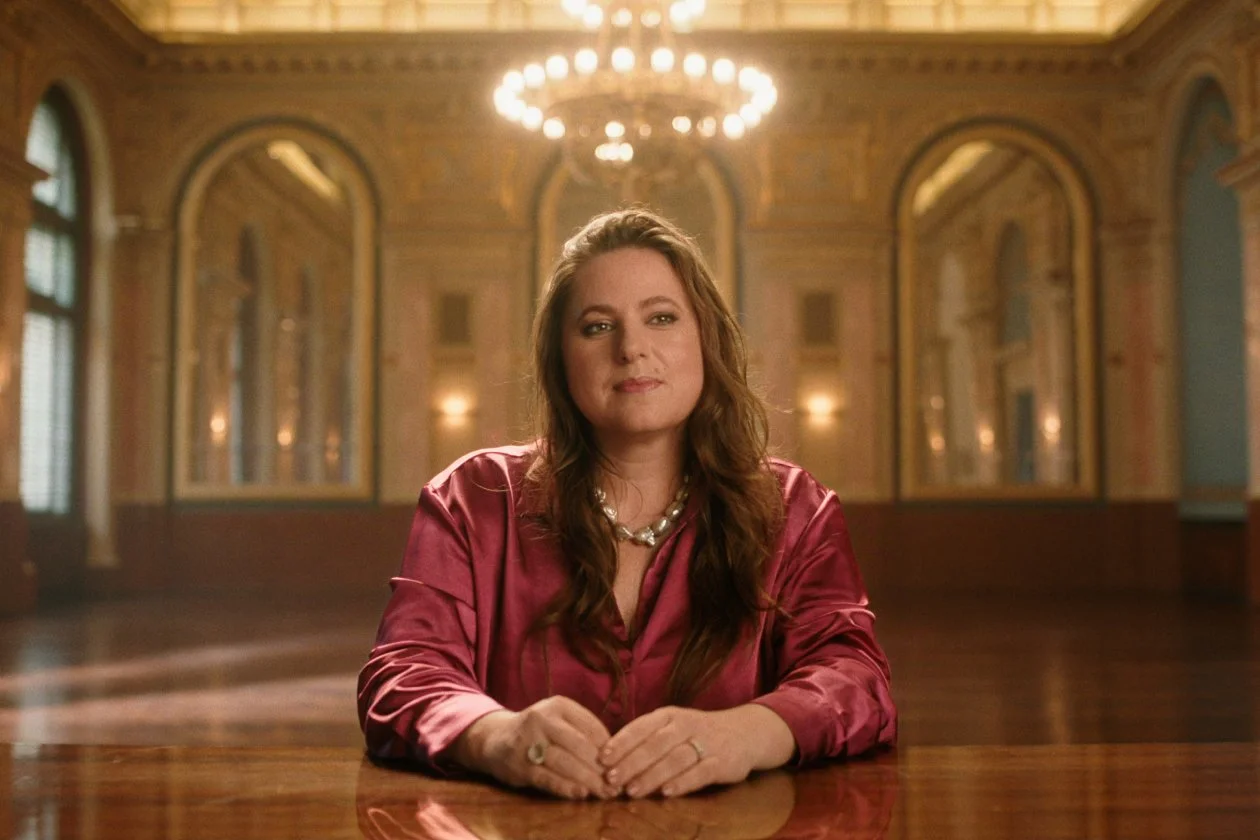
Who says? Our queen, Judit Polgar. Since the age of five she had been forced to train for hours a day to do one thing and one thing only: Become a chess genius champion.

If that sounds terrible, you’ll have no time to think about it; the movie starts fast and loud, throwing information at us—now she’s five now she’s 12 now she’s great now she’s a 15-year-old champion of all women globally who is about to challenge the world #1 of then and all other times before then—a grown man—which has never been done before because how could it because women are not smart enough and wow isn’t this exciting what will happen next? Wow wow right?!

. . . Phew! Too much. Perhaps overcompensating on the assumption that people find chess boring? Luckily after that brief time the movie slows down and really gets good.

Then, we look into Judit’s dad’s eyes as he explains why he made his daughter an experiment. We hear Judit herself speak in detail about games and moves and feelings from years ago as though they are happening right now on a chessboard right in front of us. This is movie gold, folks. We are learning from the great and the strange the how and the why.

It’s also true that there is nothing great or strange about this. We’re watching the story of a normal person, an underdog. Sure we’re following tournaments and life events, but really, we’re following emotions and mindsets.

So what’s the endgame? As with all things, it’s whatever you want it to be. Judit, though, does seem to have thoughts about her life, experiment or not: We can learn from our moves, good and bad; we can react with fear, or respond with determination; we can care what others might think, or we can focus on our own game, daring to believe that we are good enough to do what we love.

Long live the queen (for as long as she wants)!

In 2026, Sundance 2026, Documentary

Who else?

Photo by Bettmann Archive/Getty Images

Joybubbles

Michael Borek February 5, 2026

Joybubbles may sound silly, but it’s a staggeringly affecting documentary. Wow.

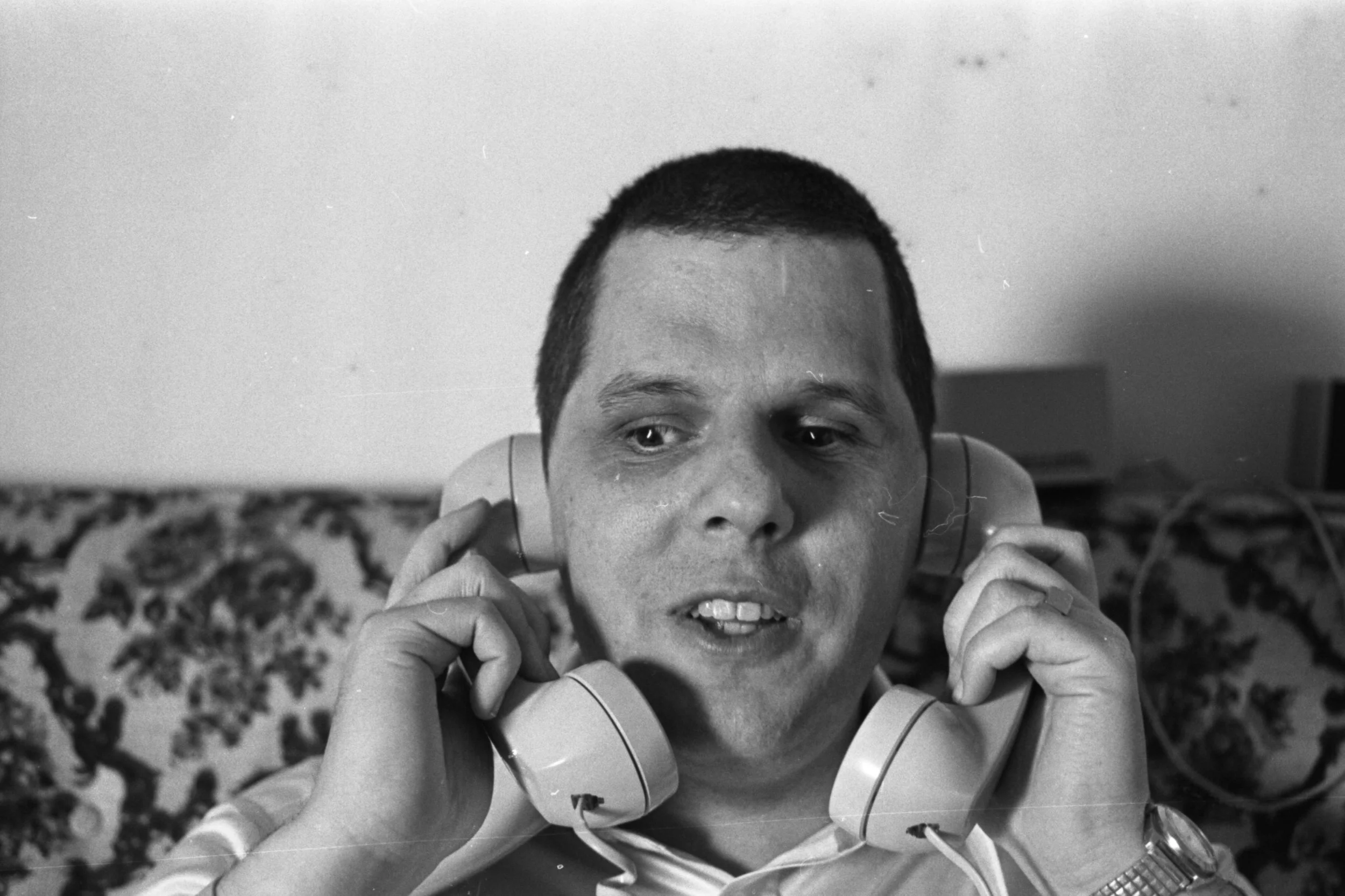
Listen to Joe’s recordings and you’ll see—not like him, of course, because he was born blind ;)—but you’ll begin to understand who he is and why there’s a movie about him.

It turns out that in the past, the world was not so accepting of people like him. That’s rich, because he wanted to help people instead of being helped all the time; to connect with people without them bullying or feeling sorry for him.

And then, as happens in life, something simple but eventually meaningful happens: He encounters a landline phone. What follows is unbelievable, and Joe and his friends/associates tell us all about it. Think whistling, the world’s most powerful company, crime, secret emotion, and more.

That’s it, and that’s plenty. Now some words for our star.

Joe, thank you for sharing your wise technologist explorer linguist poet entertainer self with the world. I hope you felt at least some of the love that others felt from you. You’re a smart guy and already know this, but as a reminder, only the most mature people decide to keep childlike wonder alive while also trying to heal themselves and help others as they make their way through this world. You are a bastion, a beacon, a joybubble; now and forever.

In 2026, Sundance 2026, Documentary

Cleveland?

Carousel

Michael Borek February 2, 2026

Life! So much hard work, over and over again. And where does it get us?

Carousel feels this. In the way it pieces together moments from the lives of two homegrown locals, it brilliantly illuminates where that feeling can come from—and what we can do about it.

From the very beginning we can feel the movie’s gentle charm. The camera sits still, reminding us that in this anytown—where exhaustion and fear and work and debt and heartbreak live—there are other things, too. Potted plants and bees and love can flourish, a gorgeous music that, if you haven’t noticed, we gloss over when dazed by stress.

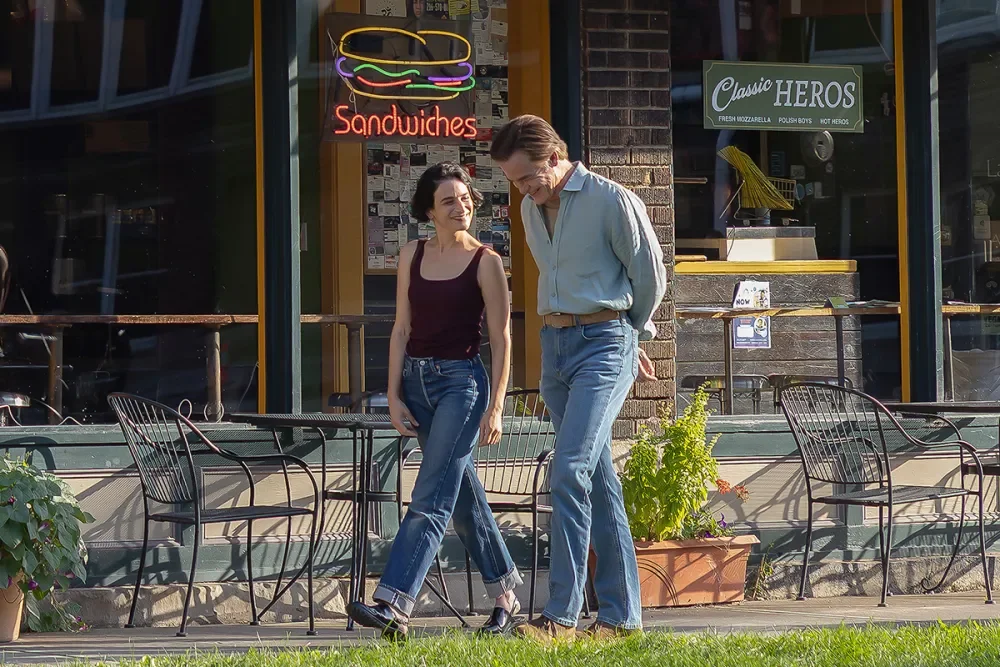
So what happens? Noah, who is juggling his failing medical practice, the aftermath of a divorce, and raising his smart but sad teenage daughter, goes through the motions. But he stops for just a moment when encountering Rebecca, a gifted politico who is tired of work in D.C. yet tired of coming home too. We wonder why. Then the movie does its thing.

This may sound boring or like it’s been done before, but not even for one second does this movie feel tired. Masterful, glorious writing/directing has even leftovers-for-dinner-again and people’s location in a room surprise our brains. Sure, we’re zoomed in on a hand and not a face, or we’re thinking about napkins once more, but actually, personalities and emotional states are being framed for us. Amazing.

Aside from this writer/director being a revelation, the production design, location scouting, editing, and other technicals are quiet perfection, allowing the outstanding performances from our three leads to throb through the screen into our chests.

Folks, what the moviemakers did here was jolt the carousel for a moment, showing us the beauty that truly exists on it, even as it spins in the same place, over and over and over again.

In 2026, Sundance 2026, Drama, Family

Subscribe!

Share your email to receive our monthly newsletter!

We respect your privacy.

We use your email only to send you the monthly newsletter.

We will never share your information.

You can unsubscribe at any time.

Thank you! Cool stuff on the way!

Powered by Squarespace