
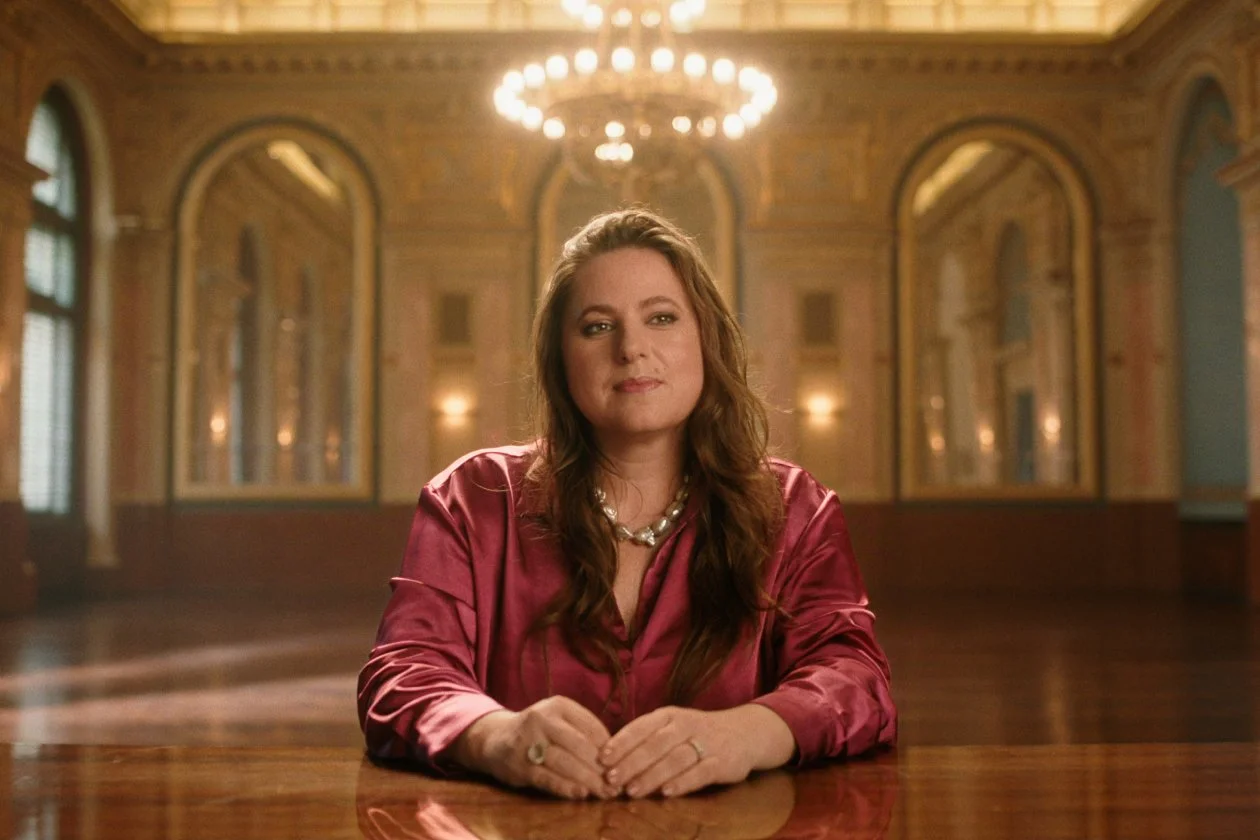
The great thing about the documentary Queen of Chess is that it doesn’t even try to make chess fun. Instead, it’s a light and uplifting reminder that mindset can change our lives.
Who says? Our queen, Judit Polgar. Since the age of five she had been forced to train for hours a day to do one thing and one thing only: Become a chess genius champion.
If that sounds terrible, you’ll have no time to think about it; the movie starts fast and loud, throwing information at us—now she’s five now she’s 12 now she’s great now she’s a 15-year-old champion of all women globally who is about to challenge the world #1 of then and all other times before then—a grown man—which has never been done before because how could it because women are not smart enough and wow isn’t this exciting what will happen next? Wow wow right?!
. . . Phew! Too much. Perhaps overcompensating on the assumption that people find chess boring? Luckily after that brief time the movie slows down and really gets good.
Then, we look into Judit’s dad’s eyes as he explains why he made his daughter an experiment. We hear Judit herself speak in detail about games and moves and feelings from years ago as though they are happening right now on a chessboard right in front of us. This is movie gold, folks. We are learning from the great and the strange the how and the why.
It’s also true that there is nothing great or strange about this. We’re watching the story of a normal person, an underdog. Sure we’re following tournaments and life events, but really, we’re following emotions and mindsets.
So what’s the endgame? As with all things, it’s whatever you want it to be. Judit, though, does seem to have thoughts about her life, experiment or not: We can learn from our moves, good and bad; we can react with fear, or respond with determination; we can care what others might think, or we can focus on our own game, daring to believe that we are good enough to do what we love.
Long live the queen (for as long as she wants)!